



MODIFIED ON: December 19, 2025 / ALIGNMINDS TECHNOLOGIES / 0 COMMENTS

Introduction
Imagine AI systems that understand language nuances and make independent decisions, tailoring experiences to individual preferences while ensuring privacy. This is the next-genAI promise. According to a recent report, the worldwide AI market is expected to be valued at $309.6 billion by 2025, which will be propelled by developments in machine learning, natural language processing, and tailored algorithms.
AI is heading a radically different new era of the new age with the next-generation AI systems, or just next-gen AI, coming. Such systems constitute a major jump in the concept of artificial intelligence by having features and capabilities unheard of before in a wide range of applications and life aspects, thus going beyond the idea of computers simply reacting to intelligent, adaptive platforms that enable deeper human-AI collaboration.
What is Next-Gen AI?
Traditional artificial intelligence programs could identify pictures, make rudimentary predictions, and answer predetermined questions. Next-generation AI advances several steps farther. It innovatively achieves this by employing the most modern methods to handle different data types, carry out operations without any human intervention, and provide real-time insights.
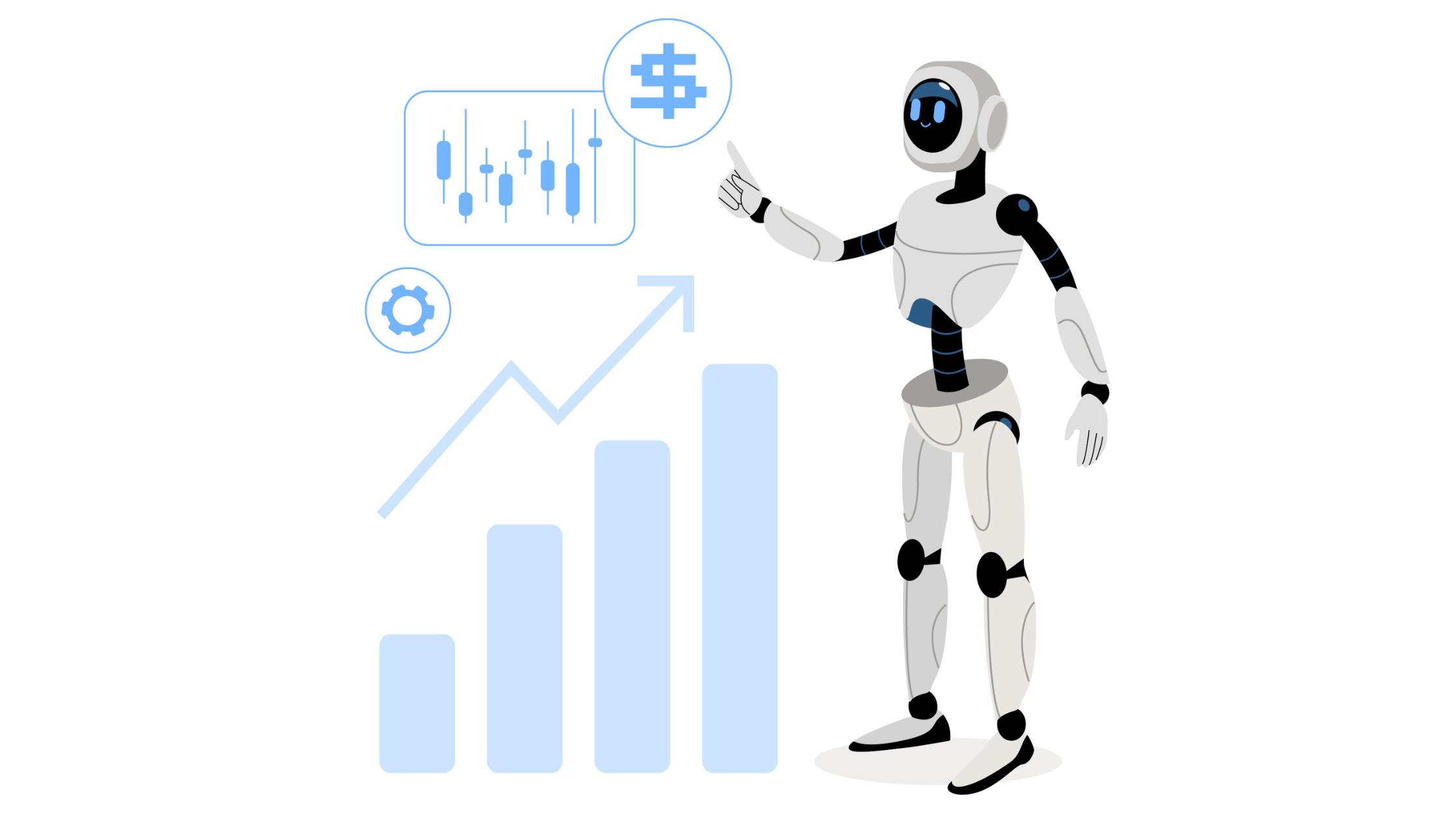
A few features of next-generation AI are:
1. Agentic AI: It denotes the group of autonomous agents that are able to plan, execute, and adapt without any kind of human intervention.
2. Generative AI: It represents the mechanisms that can come up with entirely new content in any form, such as text, images, code, or even artificially generated datasets.
3. Multimodal models: This refers to AI systems that understand and combine different input sources like text, images, audio, and video.
4. Real-Time Decision Engines: These models have the capability to not only take in but also analyze the live data streams that are live, and based on the analysis, the models can decide on the action that needs to be taken immediately.
Next-Gen AI (next-generation AI) refers to a future concept of artificial intelligence that implies the farthest developments in AI, which are a few orders of magnitude more advanced than traditional AI models and simple rule-based automated systems. These systems run on the three technologies combined—generative AI, multimodal AI, and complex reasoning—to come up with a solution that is not only fast and accurate but also has a high degree of adaptability.
Unlike earlier systems that relied heavily on static data, next-generation AI systems evolve continuously, enabling intelligent decision-making and powering modern autonomous systems across sectors.
Next Gen-AI applications
Next-generation AI technology can be used in a multitude of ways across various industries and fields of interest. There are a few intriguing next-generation AI usage examples that I feel compelled to mention.
1. Data-driven decision-making
An excellent business tool with next-generation AI is AI-powered decision-making, which enables companies to maintain their competitive advantage. Leveraging predictive analytics, such machines process very large datasets in great depth in order to glean patterns, trends, and correlations which, therefore, assist enterprises in doing more effective strategic planning, marketing optimization, supply chain forecasting, and risk management, thus achieving higher levels of efficiency and money saving.
2. Advanced learning algorithms

New AI systems are equipped to train models in less time and gain more adaptability through features such as self-supervised learning, meta-learning, and transfer learning. Thanks to these techniques, they are able to learn with minimal data, overfitting is alleviated, and the systems can handle a wider range of tasks.
Consider reinforcement learning algorithms, for example. When combined with deep Q-networks (DQNs) or proximal policy optimization (PPO), these methods allow for real-time decision-making in complicated scenarios such as autonomous driving and gaming AI—core capabilities of intelligent autonomous systems.
3. Progressive language processing
Modern next-gen AI systems are equipped with very advanced language processing features, which enable them to comprehend and react to human language in a very subtle and context-appropriate way. These systems apply highly developed natural language processing algorithms to grasp the content, identify the sentiment, and interact in a dialog that is relevant and meaningful.
Such a feature is vital for the likes of customer support chatbots, virtual assistants, and language translation tools to be more efficient and effective in serving real-world business interactions where human-AI collaboration gets strengthened.
4. Privacy-preserved AI
Next-gen AI is also improving data security through different techniques like federated learning, which allows training models on various devices without sharing the raw data. In order to build such systems, developers make use of technologies like TensorFlow Federated (TFF) and PySoft; meanwhile, the statistical noise is introduced to the data sets with the help of differential privacy in order to keep the data anonymous and still provide aggregate insights.
Furthermore, techniques such as homomorphic encryption are utilized to execute computation on encrypted data, allowing for safe collaborative models in healthcare and finance, where data security is critical.
5. Personalized experience
Next-gen AI achieve higher level of personalization by leveraging sophisticated techniques collectively known as multi-armed bandit algorithms, collaborative filtering, and contextual embeddings. An app powered by next-generation AI can dynamically adjust itself to the new situation by inferring the user’s data online and using the embedding layer of the neural network, for example, as its method.
Personalization isn’t limited to text answers. You may utilize it to improve any aspect of the client experience. Consider recommendation engines that employ graph neural networks (GNNs) to map user-item associations, as well as apps that use A/B testing frameworks to provide highly tailored user experiences.
Next-Gen AI technologies

1. Google’s Duplex
Google’s Duplex is a remarkable real-world example of a next-generation AI system, since it is an AI-powered conversational agent meant to do specified tasks using natural language interactions.
Here’s a summary of its capabilities and influence.
Google’s Duplex is an AI system created by Google, which is a significant technological leap for AI assistants. It excels in completing tasks and interactions in the real world via a phone call. On account of the voice being very natural-sounding and the context comprehension ability, Duplex performs some operations that are a few steps away from making a reservation and arranging a meeting seamlessly, in the manner of a human.
The system, which is implemented an adaptive learning, can go forward all the time and can also accommodate different dialects and speech patterns. Google is a company that is in favor of privacy and transparency towards users; hence, they inform users when they are dealing with Duplex, and they also employ privacy-preserving methods to keep users’ data safe.
2. DataRobot
DataRobot speeds up model creation, deployment, and administration. It’s great for enterprises looking to add skills like anomaly detection and predictive analysis to their operations without recruiting many scientists.
DataRobot’s AutoML features can help you create machine learning models more quickly and correctly. You can also utilize the platform to automate everything from data preparation to model tweaking, and it’s widely used in areas such as banking, healthcare, and retail to provide real-time business insights.
Final Thoughts
AI is designed to replace tasks, not individuals. It has already eliminated monotonous activities like data entry, basic bookkeeping, and regular customer service. It is also beginning to replace more sophisticated fields like paralegal research, market trend analysis, and medical imaging diagnostics. In just a few seconds, AI, for instance, can go through numerous legal documents or identify anomalies in X-rays, thereby making human beings available for other, more important tasks.
Beyond 2024, AI systems of the next generation will significantly change the way we work, innovate, and collaborate in various sectors. Companies that collaborate with a proficient artificial intelligence development company in the US can stay ahead of the competition by implementing smart, scalable, and AI solutions that are ready for the future.
At Alignminds, we deliver end-to-end AI Development Services in US, helping businesses harness Generative AI, Multimodal AI, and intelligent automation to drive measurable impact.
Ready to build smart, future-proof AI solutions?
Partner with Alignminds for a cutting-edge AI Software Development Service and completely change the way your business innovates, grows, and competes in the era of next-gen AI.
Leave a reply
Your email address will not be published.
-
Recent Posts
- Why Enterprise RAG Projects Fail in Production and How to Fix Them
- RAG vs. Fine-Tuning vs. AI Agents: How Enterprises Should Choose
- Top Product Engineering and Product Modernization Partners for European Enterprises
- Legacy Application Modernization: When Should Enterprises Rebuild, Refactor or Replace?
- When AI Coding Tools Aren’t Enough: What Enterprise Engineering Teams Still Need
-
Categories
- MVP Development (5)
- AlignMinds (78)
- Operating Systems (1)
- Android POS (4)
- Application Hosting (1)
- Artificial Intelligence (95)
- Big Data (2)
- Blockchain (1)
- Cloud Application Development (10)
- Software Development (50)
- Software Testing (9)
- Strategy & User Experience Design (4)
- Web Application Development (28)
- Cyber Security (6)
- Outsourcing (7)
- Programming Languages (3)
- DevOps (5)
- Software Designing (6)
- How to Code (4)
- Internet of Things (1)
- Machine Learning (3)
- Mobile App Marketing (7)
- Mobile Application Development (28)
- Mobile Applications (12)