


MODIFIED ON: September 7, 2026 / ALIGNMINDS TECHNOLOGIES / 0 COMMENTS
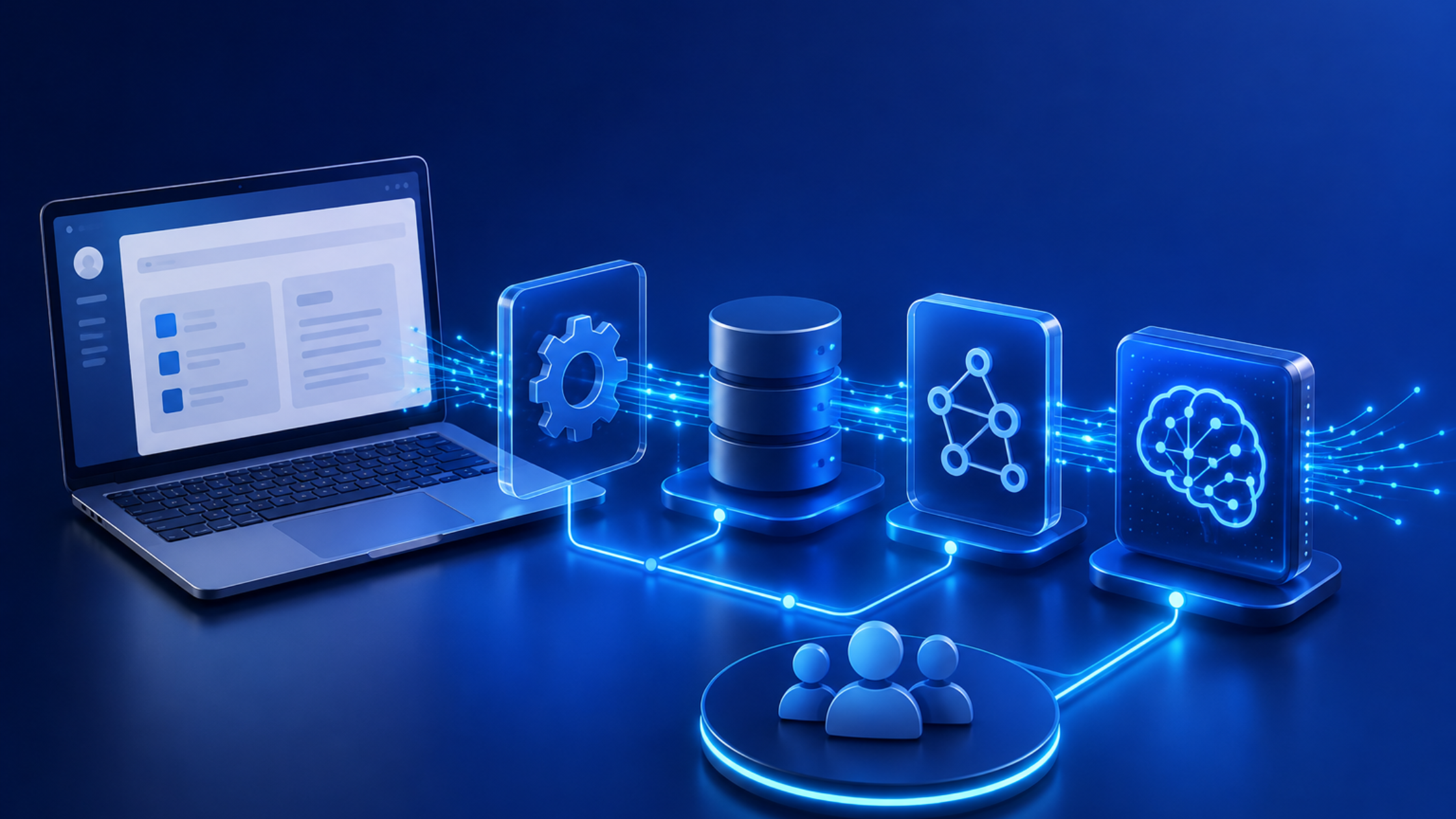
Artificial intelligence is quickly becoming part of the products customers and employees use every day. But for many enterprises, the challenge isn’t building a new AI product from scratch. It is figuring out how to add AI to an existing product without replacing the technology stack that already runs the business.
The good news is that becoming an AI-ready product does not necessarily require a complete rebuild. With the right architecture, data foundation and integration strategy, organizations can introduce AI capabilities incrementally while continuing to use their existing applications.
What Does an AI-Ready Product Mean?
An AI-ready product is an application designed or adapted to support AI capabilities reliably as business requirements evolve.
That can include generative AI, predictive analytics, recommendation engines, computer vision, conversational interfaces or AI agents.
Being AI-ready is less about choosing a particular AI model and more about creating the foundation around it. Microsoft’s current guidance for AI application design highlights areas such as application architecture, data and knowledge layers, orchestration, security, scalability and model lifecycle management. Microsoft Azure’s AI application design guidance provides a useful reference for these considerations.
For an existing product, the objective is therefore not to replace everything. It is to identify where AI can add measurable value and prepare the relevant parts of the product to support it.
1. Start With the Existing Product Architecture
Before introducing AI, understand how the current product works.
Look at the application’s:
•Frontend and user experience
•Backend services
•APIs and integrations
•Databases
•Authentication and authorization
•Business logic
•Cloud infrastructure
•Monitoring and deployment processes
This assessment helps identify architectural constraints that could affect AI integration. For example, an application with well-defined APIs and modular services may be able to introduce AI features relatively quickly. A tightly coupled legacy application may first require targeted application modernization.
That does not automatically mean rebuilding the entire system. Modernization can be incremental, focusing only on the components that prevent the product from evolving.
AlignMinds helps businesses approach this through Product Engineering and Product Modernization, including architecture redesign, AI integration and cloud transformation.
2. Make the Data Foundation AI-Ready
AI applications depend heavily on the quality, accessibility and governance of data.
Existing products often contain valuable information across databases, documents, APIs and third-party systems. The challenge is making that information available to AI systems in a controlled and useful way.
An AI-ready data foundation should consider:
•Data quality and consistency
•Structured and unstructured data
•Data access controls
•Metadata and context
•Data pipelines
•Retrieval mechanisms
•Privacy and governance
For generative AI applications, retrieval-augmented generation (RAG) can allow models to work with relevant organizational information without requiring the entire application or model to be rebuilt.
Microsoft’s current guidance similarly separates the knowledge layer from the intelligence and inference layers when designing AI applications. Azure’s AI workload architecture guidance provides a useful framework for thinking about these components.
3. Use APIs Instead of Rebuilding Core Business Logic
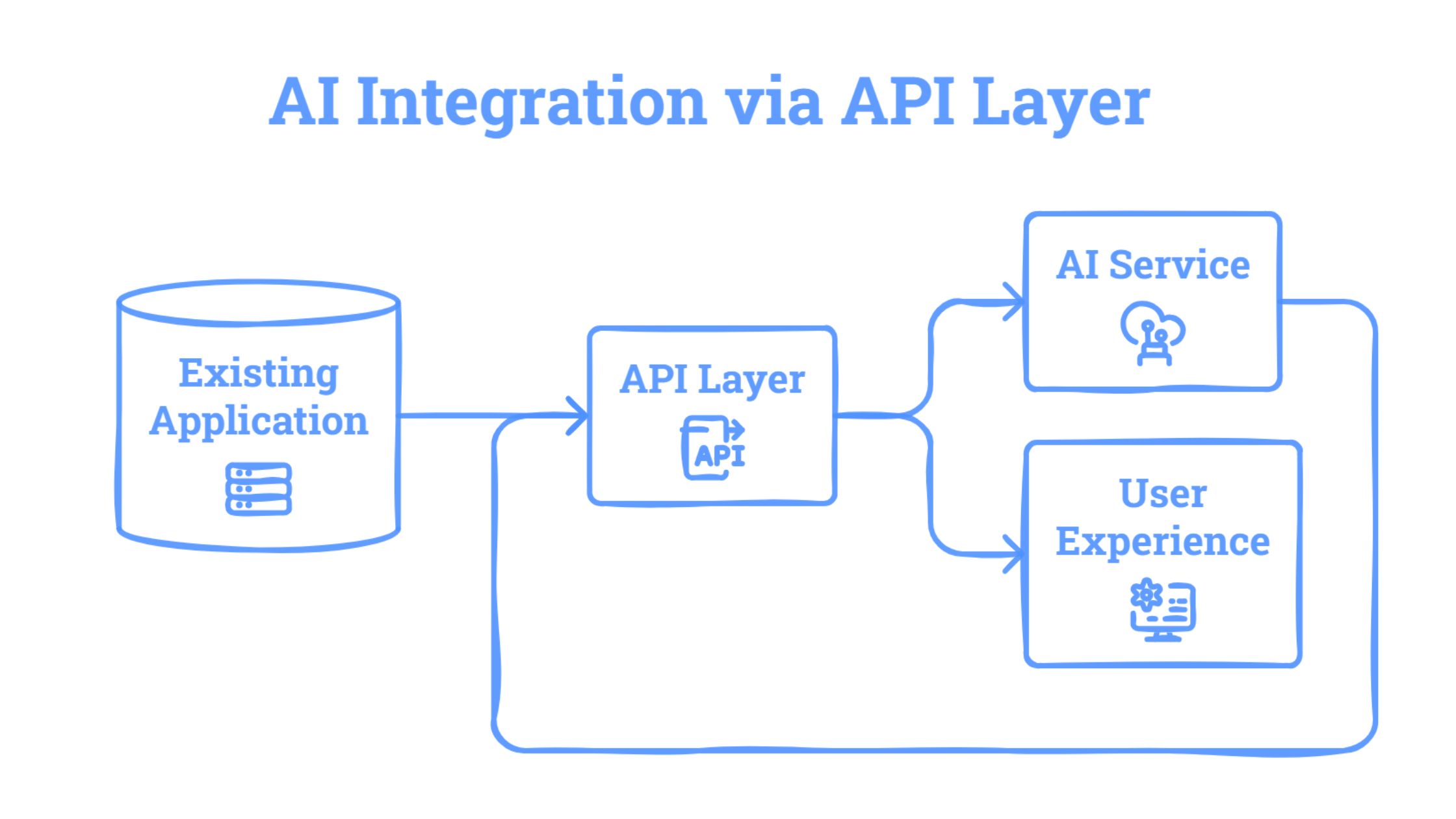
One of the most practical ways to make existing software AI-ready is to expose the right capabilities through secure APIs.
Instead of embedding AI directly into every part of the application, organizations can create an integration layer between existing business systems and new AI capabilities.
For example:
Existing application → API layer → AI service → response → existing user experience
This approach makes AI integration more flexible. Organizations can introduce an AI assistant, recommendation engine or intelligent workflow without changing the underlying transaction system.
It also creates flexibility to change AI models or providers as technology evolves.
4. Introduce AI Where It Solves a Real Product Problem
Not every feature needs AI.
The strongest AI product development strategies begin with a business or user problem rather than a model.
Potential opportunities might include:
•Intelligent search
•Personalized recommendations
•Customer support assistants
•Document analysis
•Predictive insights
•Workflow automation
•Natural-language interfaces
•Content generation
•Anomaly detection
The goal is to identify areas where AI can improve the product experience, reduce manual effort or create a new capability.
Starting with one high-value use case also makes it easier to measure results before expanding AI across the product.
5. Build Security and Governance Into the Architecture
Adding AI introduces new considerations around data access, model behavior, privacy and security.
An AI-ready application should therefore establish appropriate:
•Authentication and authorization
•Data access controls
•Input and output validation
•Monitoring and logging
•Human oversight where required
•Model evaluation
•Security testing
•Governance policies
The OWASP GenAI Security Project provides resources for understanding security risks associated with LLM-based applications.
Security should not be treated as something added after the AI feature is launched. It should be part of the architecture from the beginning.
6. Modernize Incrementally, Not All at Once
The biggest misconception about AI modernization is that organizations need to replace their entire technology stack before they can use AI.
In reality, an incremental approach can often be more practical.
A business can:
Assess → Prioritize → Integrate → Test → Measure → Scale
Start with the application component or workflow where AI can provide the greatest value. Modernize the supporting architecture where necessary, while keeping stable systems that continue to perform their core functions.
AWS also recommends decomposing AI application logic into smaller, loosely coupled components where appropriate, aligning AI workloads with cloud-native architectural principles. AWS Prescriptive Guidance provides further guidance on production AI architecture.
The Path to an AI-Ready Product
Becoming an AI-ready product is not about abandoning an existing technology investment. It is about creating enough flexibility around that investment to introduce intelligent capabilities safely and progressively.
The right approach typically combines AI product development, application modernization, API integration, data readiness, cloud architecture and strong engineering practices.
For organizations with established digital products, the question should not simply be, “Do we need to rebuild for AI?”
A better question is:
“What needs to change so our existing product can evolve with AI?”
That shift can turn AI adoption from a costly rebuild into a practical product evolution strategy.
If your existing product needs to become AI-ready, talk to AlignMinds about AI development and product engineering and explore an incremental approach to AI integration and modernization.
Leave a reply
Your email address will not be published.
-
Recent Posts
- Top Product Engineering and Product Modernization Partners for European Enterprises
- How to Make an Existing Product AI-Ready Without Rewriting the Entire Tech Stack
- Why Middle East Enterprises Are Choosing India-Based AI Development Partners
- Agentic AI Development: A Complete Enterprise Guide
- How AI Is Cutting Legacy System Modernization Timelines in Half for US Enterprises
-
Categories
- MVP Development (5)
- AlignMinds (77)
- Operating Systems (1)
- Android POS (4)
- Application Hosting (1)
- Artificial Intelligence (95)
- Big Data (2)
- Blockchain (1)
- Cloud Application Development (10)
- Software Development (50)
- Software Testing (9)
- Strategy & User Experience Design (4)
- Web Application Development (28)
- Cyber Security (6)
- Outsourcing (7)
- Programming Languages (3)
- DevOps (5)
- Software Designing (6)
- How to Code (4)
- Internet of Things (1)
- Machine Learning (3)
- Mobile App Marketing (7)
- Mobile Application Development (28)
- Mobile Applications (12)